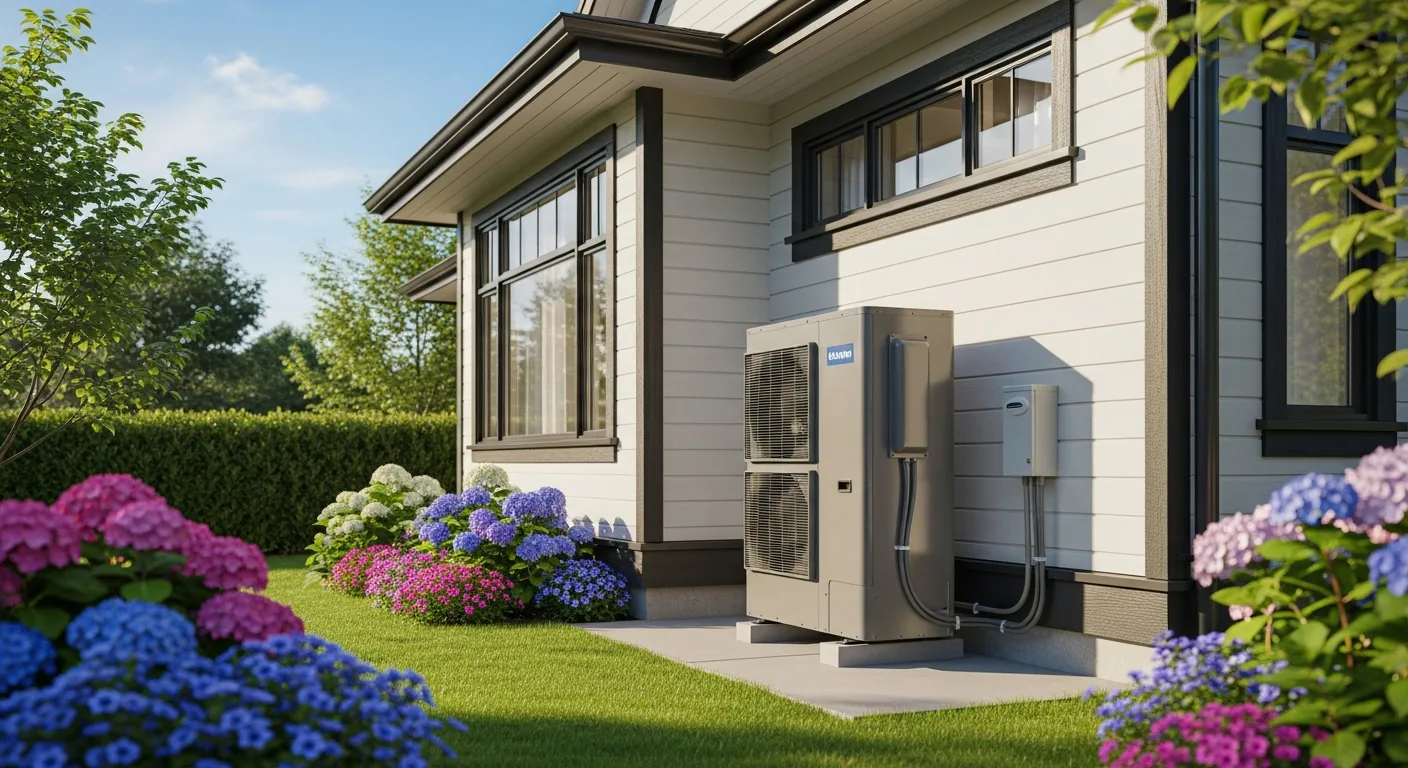
One of the most common questions homeowners ask contractors right now: "Are the heat pump tax credits still available?" The answer is yes. The Section 25C federal tax credit runs through 2032. But there's a second program most contractors have never explained to a customer: HEEHRA state rebates, which can stack on top and add another $4,000–$8,000 for income-qualified households.
Quick Answer
The 25C credit was not replaced. It still runs through 2032 (up to $2,000/year for heat pumps, $600/year for furnaces and AC). What's new in 2026 are HEEHRA state rebate programs, which provide separate, income-qualified rebates of up to $8,000 for qualifying heat pumps, administered at the state level. The two programs can be stacked on the same installation.
Key Takeaways:
- The Section 25C credit was not eliminated. It runs through 31 December 2032 under the Inflation Reduction Act.
- HEEHRA (High-Efficiency Electric Home Rebate Act) is the new state-level program. Up to $8,000 for qualifying heat pumps for households below 80% of Area Median Income.
- 80–150% AMI households can receive 50% of qualifying equipment costs under HEEHRA.
- HEEHRA and 25C credits can be stacked, but you cannot claim 25C on the portion covered by a HEEHRA rebate.
- State programs have rolled out on a state-by-state basis since late 2024. Check energysaver.gov for your state's current status.
- Contractors who explain this clearly in proposals close more high-ticket heat pump installs.
Rank for credit and rebate searches in your city
Homeowners are searching "heat pump rebate [state]" and "HVAC tax credit 2026" before they call. If you rank and explain it clearly, you get the install.
What Is the Section 25C Credit? (Still Active Through 2032)
The Section 25C Energy Efficient Home Improvement Credit was dramatically expanded by the Inflation Reduction Act (IRA), signed into law in August 2022. Before the IRA, the credit was a modest $500 lifetime cap. Since 1 January 2023, it provides 30% of the cost of qualifying HVAC equipment, with these annual caps:
| Equipment | Annual Credit Cap | Income Limit |
|---|---|---|
| Qualifying heat pump (air-source) | Up to $2,000 | None |
| Qualifying central AC or gas furnace | Up to $600 | None |
| All 25C improvements combined | $3,200 cap/year | None |
The 25C credit is available to all income levels. It is non-refundable (reduces tax owed to zero, no cash refund) and is claimed on IRS Form 5695. The caps reset each tax year, so a homeowner can claim credits in consecutive years on different improvements.
What Is HEEHRA? The State Rebate Program
HEEHRA (High-Efficiency Electric Home Rebate Act) is Title IV of the IRA. It allocated $4.3 billion to the US Department of Energy to distribute to states for point-of-sale or mail-in rebates on efficient electric appliances and HVAC equipment. Unlike the 25C credit:
- HEEHRA is income-qualified. You must earn below 150% of your Area Median Income (AMI) to be eligible.
- HEEHRA is state-administered. Each state must apply to the DOE, set up a program, and manage distribution.
- HEEHRA provides rebates at or near the point of purchase, reducing the upfront cost rather than providing a credit at tax time.
| Household Income | Heat Pump Rebate | Structure |
|---|---|---|
| Below 80% AMI | Up to $8,000 | 100% of equipment cost (up to cap) |
| 80–150% AMI | Up to $4,000 | 50% of equipment cost (up to cap) |
| Above 150% AMI | Not eligible for HEEHRA | 25C credit still applies |
HEEHRA rebates apply to qualifying air-source heat pumps, heat pump water heaters, electrical panel upgrades, and insulation. Equipment must be installed in the homeowner's primary residence, not new construction.
How 25C and HEEHRA Stack Together
The key rule: you cannot claim the 25C tax credit on the portion of cost covered by a HEEHRA rebate. But on the remaining balance, the 25C credit still applies.
Example: Heat Pump at $10,000 Total Cost
Example only. HEEHRA eligibility depends on household income and state program availability. Actual amounts vary.
For a household that is not income-qualified for HEEHRA, the 25C credit alone still applies in full: 30% of cost up to the $2,000 cap.
State-by-State HEEHRA Status in 2026
States must apply for DOE funding, get approval, and set up their own program infrastructure before homeowners can access rebates. This has meant a staggered rollout since late 2024.
States that launched HEEHRA rebate programs among the first wave include Maine, Colorado, Arizona, Rhode Island, California, Georgia, and New York. Each state's program varies in its exact income verification process, rebate delivery method (point-of-sale reduction vs. mail-in rebate), and which qualified contractors can participate.
Many more states are in active program development or have received DOE approval and are building their delivery infrastructure. States that were later to apply for federal funding are still in the setup phase.
State program status changes frequently
Because programs are launching and updating on a rolling basis, always check the current state of your program directly with the US Department of Energy at energysaver.gov/home-energy-rebates or your state energy office. The DOE maintains a live map and program tracker updated as states go live.
What Contractors Should Know About State Programs
Even in states with active programs, the rebate typically flows through the contractor or a registered program portal. In some states:
- Contractors must register with the state program to issue rebates at point-of-sale.
- Equipment must be from an approved list. Not every ENERGY STAR heat pump automatically qualifies under HEEHRA.
- Income verification is handled differently by each state: some use a self-attestation form, others require documentation submitted to the state.
If you install heat pumps in a state with an active program, getting registered in the program is worth the admin time. It means you can offer customers a clear upfront reduction rather than asking them to apply separately.
How HVAC Contractors Can Use This in Their Sales and SEO
In the Sales Conversation
The biggest barrier to heat pump installs at the high-efficiency tier is sticker shock. A dual-fuel heat pump system that costs $11,000–$14,000 installed feels like a hard sell when a gas furnace replacement is $5,000–$7,000.
The net-cost calculation changes the conversation entirely. When you walk a customer through the 25C credit ($2,000), any applicable HEEHRA rebate, and the long-run energy savings on a properly sized heat pump, the premium tier becomes the obvious choice for many customers who would otherwise default to the cheaper option.
Contractors who proactively put the after-incentive cost in front of customers in writing, before any competitor does, win more of those installs. The same proactive approach applies to being found in the first place: our roundup of the best HVAC SEO companies compares the agencies that get contractors in front of these buyers.
In Your SEO and Content
Homeowners are searching for this information before they call. Searches like "heat pump rebate [state]", "HVAC tax credit 2026 [city]", and "Section 25C heat pump [state]" get real volume in markets where heat pump adoption is growing. A contractor who has a clean, accurate explainer page on their website ranks for those searches and gets the call.
Most contractors have no such page. The ones who do are capturing high-intent traffic from homeowners who have already decided they want a heat pump and are now looking for a contractor who understands the incentive landscape.
See our HVAC Local SEO service for how we build this kind of content for contractors and tie it to Map Pack rankings in their specific service area.